

Since Thursday, February 6, when the House of Representatives announced the receipt of proposals for the creation of 31 new states across Nigeria’s six geo-political zones as part of the ongoing review of the 1999 Constitution (as amended), reactions from Nigerians have been overwhelming. The House also affirmed its readiness to consider these proposals once they meet the stipulated guidelines.
Reactions have come from all segments of society, cutting across age, religion, ethnicity, and profession—ranging from regional bodies to professionals and individuals.
If approved, the new states would increase Nigeria’s total from the current 36 to 67. Presently, the South East has five states, while the South West, South-South, North Central, and North East each have six. The North West has the highest, with seven states.
A breakdown of the proposals reveals that in the North Central, seven new states have been proposed: Benue Ala, Apa Agba, and Apa from Benue State; Okun, Okura, and Confluence from Kogi State; and upgrading the Federal Capital Territory (FCT), Abuja, to a state.
In the North East, proposals have been submitted for Amana, Katagum, Savannah, and Muri states, to be carved out of Adamawa, Bauchi, Borno, and Taraba states. Similarly, the North West has proposals for five new states: New Kaduna and Gurrara from Kaduna State; Tiga and Ghari from Kano State; and Kainji from Kebbi State.
For the South East, the proposed states include Etiti (to be carved from all five existing states in the zone), Adada (from Enugu State), and Orashi, Orlu, and Aba (from Imo and Abia states).
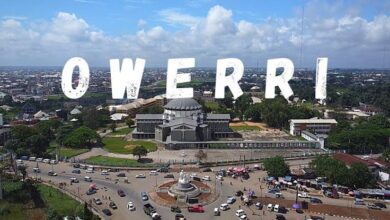
In the South-South, proponents are calling for Ogoja, Warri, and Bori states from Cross River, Delta, and Rivers states, respectively, as well as Obolo State, to be formed from Rivers and Akwa Ibom states.
The South West has six proposed new states: Toru-Ebe, to be carved from Delta, Edo, and Ondo states; Ibadan and Lagoon states from Oyo and Lagos states, respectively; Ijebu from Ogun State; and Oke-Ogun and Ife-Ijesha from parts of Ogun, Oyo, and Osun states.
The House Committee on Constitution Review, in a notice to members signed by Deputy Speaker Benjamin Kalu, who also chairs the committee, directed proponents to re-submit their requests in line with constitutional requirements.
“The committee has reviewed the proposals for the creation of new states in accordance with Section 8(1) of the Constitution of the Federal Republic of Nigeria, 1999 (as amended). This section outlines specific requirements that must be fulfilled to initiate the process of state creation. Proposals will be re-submitted in strict adherence to these stipulations,” Kalu stated.
The deputy speaker assured that the “Committee remains committed to supporting legitimate efforts that align with constitutional provisions and will only consider proposals that comply with the stipulated guideline.”
However, some Nigerians oppose the move, arguing that instead of creating more states, the country should return to a regional structure.
Proponents of this argument believe Nigeria was better governed under the regional system and view the creation of 12 states by General Yakubu Gowon during the Nigerian-Biafran War as a strategy to weaken the Eastern Region rather than foster development.
Conversely, others argue that state creation fosters development, especially for marginalized communities, and support the proposals as long as they adhere to constitutional guidelines.
A third perspective holds that while creating more states may not be ideal, the South East should be granted at least one additional state to ensure equity, justice, and fairness across the six geopolitical zones.
Two major regional bodies have voiced strong opposition to the plan: the Yoruba socio-political group, Afenifere, and the Arewa Consultative Forum (ACF). Both have dismissed the proposed state creation as unnecessary and counterproductive.
Afenifere’s National Organizing Secretary, Abagun Kole Omololu, criticized the proposal, stating that it contradicts the group’s longstanding advocacy for true federalism.
**“The recent proposal by the House of Representatives Committee on Constitution Review to create 31 new states does not align with Afenifere’s long-standing demand for true federalism.
“Instead of addressing the core structural issues plaguing Nigeria, this initiative appears to be a mere political exercise that will further weaken governance and deepen economic inefficiencies.
“The creation of more states without a viable economic foundation will only compound the financial burden on the nation, as many existing states are already struggling to generate sufficient internally generated revenue and rely heavily on federal allocations to survive.
“Turning every local government into a state is not the solution to Nigeria’s governance challenges. The real issue is not the number of states but the dysfunctional federal structure that has concentrated power at the centre, stifling regional development,”** he said.
Afenifere urged the National Assembly to prioritize constitutional reforms focused on devolution of power, resource control, and granting states autonomy to develop independently.
**“Nigeria needs a system where states or regions control their resources and contribute an agreed percentage to the Federal Government, just as it was during the First Republic. This is the only path to sustainable development, not the reckless creation of more administrative units.
“Afenifere rejects this proposal and calls on well-meaning Nigerians to resist attempts to distract from the real conversation, which is restructuring and true federalism,”** Omololu declared.
Similarly, the Arewa Consultative Forum dismissed the proposal as unnecessary.
However, the Igbo socio-cultural organization, Ohanaeze Ndigbo Worldwide, has taken a different stance, advocating for more states in the South East to correct historical imbalances.
Ohanaeze’s National Publicity Secretary, Ezechi Chukwu, criticized the proposal for failing to address the South East’s long-standing marginalization.
**“South-East, all these while, is the only zone in the Federal Republic of Nigeria that has the least number of states, irrespective of our population and our contributions both economically and infrastructurally.
“So, giving the South East such a small number of five states in this bill when others that already have advantages orchestrated by successive governments before now are getting more states is quite unacceptable. It is antithetical to the commonwealth of the South-Easterners and the so-called equity we are preaching in the country.
“South-East deserves more states than any other zone in the country because it is the only zone that has been short-changed over the years by successive governments. So, if justice and equity should prevail, it must be given the highest number of states.
“So, if the Federal Government fails to correct the wrongs that had been done to the South-East over the years, this is the time to at least give this equation some terms of balance by appropriating more number of states to the South-East to be at par with the other geopolitical zones,”** he stated.
The Pan-Niger Delta Forum (PANDEF) argued that state creation would only be meaningful if all geopolitical zones were brought to parity.
PANDEF spokesman Christopher Ominimini, however, questioned the viability of new states, emphasizing that states should only be created if they can sustain themselves.
Senior Advocate of Nigeria and law professor, Chief Mike Ozekhome, dismissed the proposal as a wasteful venture.
**“I am surprised and greatly disturbed to hear that members of the NASS are proposing 31 additional states to the present already behemoth, overbloated, and unwieldy 36-state structure that Nigeria operates.
“I see this needless venture in the midst of more critical national issues as nothing but jesters playing out Baba Sallah’s Alawada Kerikeri histrionics and buffoonery.
“How can they be talking about creating additional 31 states when over two-thirds of the present states are unviable entities existing on life support and merely dependent on the federal centre for monthly oxygenation under Section 162 of the 1999 Constitution?”** he stated.
Meanwhile, Osita Okechukwu, a former Director-General of the Voice of Nigeria, welcomed the development, calling it a positive step toward national unity.
As the debate over state creation continues, opinions remain deeply divided, with some advocating for structural reform over expansion, while others see state creation as a path to equity and development.